

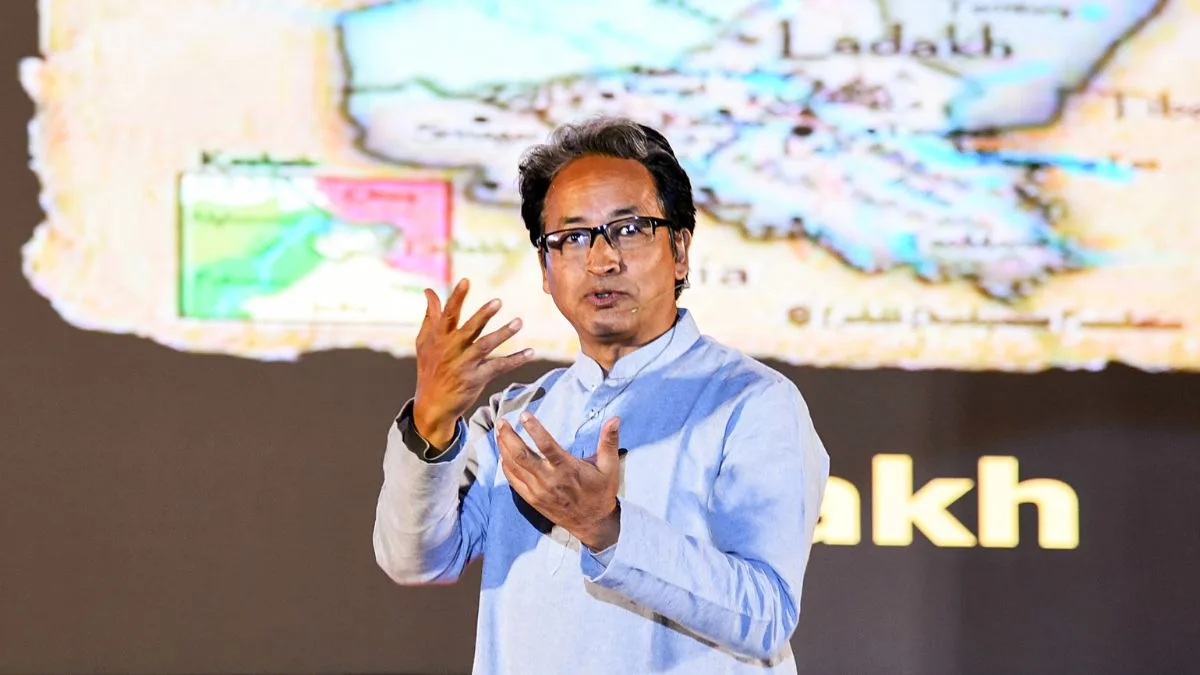
Climate activist Sonam Wangchuk has captured national attention after his detention under the National Security Act (NSA) and subsequent transfer to Jodhpur Jail in Rajasthan on Friday. This significant development has sparked outrage and debate among netizens and local residents.
Authorities in Ladakh announced Wangchuk’s detention in the early hours of Saturday, citing threats to public order and security as the primary reasons. The climate advocate had been proactive in pushing for Ladakh’s statehood and the implementation of the Sixth Schedule, alongside conservation efforts for the region’s fragile ecosystem.
Before his arrest, Wangchuk had initiated a hunger strike aimed at advocating for these demands. His fast began on September 10 and ended on September 24 amidst widespread unrest. The protests culminated in tragic incidents that resulted in four fatalities and numerous injuries due to police intervention.
The sequence of events leading to his arrest unfolded rapidly. Following the violent protests on September 24, the Ladakh administration stated that continued unrest and disorder linked to Wangchuk’s activism prompted his official detention under the NSA. An official statement declared, “It has been observed that Shri Sonam Wangchuk has been indulging in activities prejudicial to the security of the state.”
Netizens have reacted strongly to his arrest, labeling it a “black day for Ladakh.” Critics of the administration, particularly on social media, hold Lt. Governor Kavinder Gupta responsible for the escalation of violence, demanding his resignation following the tragic shootings of innocent citizens, including a retired soldier.
The press release from the Ladakh administration expressed their concerns over Wangchuk’s hunger strike and its implications. Officials pointed to a lack of cooperation, noting, “Despite clear communication from the Government regarding the High-Powered Committee (HPC) meeting, Sonam Wangchuk, with ulterior motives, continued his hunger strike.”
This situation reflects the ongoing tension between demands for greater autonomy in Ladakh and government responses to maintain peace. The administration insisted that they made the decision to transfer Wangchuk for the larger public interest, citing the need to restore normalcy in the region.
Following the official communication, the implications of this arrest extend beyond Wangchuk himself. His supporters fear that this action might impact the dialogue on statehood, while skeptics question the government’s methods of dealing with civil unrest.
Experts also weigh in on the potential ramifications of this detention on activism in Ladakh. As protests continue to develop, the individuals advocating for statehood see this as a pivotal moment. Analysts suggest that Wangchuk’s activism underscores a deep-seated desire for local governance and rights among the Ladakhi people.
While the world watches, the future of protests in Ladakh continues to waver between demands for autonomy and government measures to maintain public order. Observers express hope that dialogue will resume and that the tragic loss of life will not be in vain.