

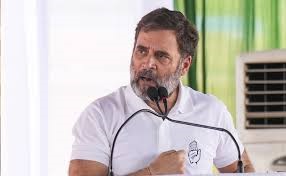
Congress leader Rahul Gandhi accused Prime Minister Narendra Modi of betraying the people of Ladakh and called for an impartial judicial probe into the police firing that resulted in the deaths of four protesters in the union territory. His comments come following a violent protest on September 24 that left those demanding statehood for Ladakh in shock.
The tragic incident occurred on a day of heightened tensions. Protesters rallied for the Sixth Schedule status, which seeks to afford autonomy and protections to tribal regions, when the situation escalated, leading to police firing that claimed innocent lives, including Kargil war veteran Tsewang Tharchin.
Gandhi, who is currently on a four-nation tour of South America, shared a poignant video of Tharchin’s father on X. In the video, the grieving father, who also served in the army, lamented the loss of his son, stating, “Father in the army, son in the army – patriotism runs in their blood. Yet the BJP government shot and killed this brave son of the nation, simply because he stood up for Ladakh and his rights.” Gandhi remarked, “Is this the reward for serving the nation today?”
In a strong statement, the former Congress President emphasized the need for accountability: “We demand that an impartial judicial inquiry into these killings in Ladakh be conducted, and the culprits must face the harshest punishment.”
Continuing his critique, Gandhi stated, “(Prime Minister Narendra) Modi ji, you have betrayed the people of Ladakh. They are demanding their rights. Communicate with them – stop the politics of violence and fear.”
Earlier, Congress general secretary Jairam Ramesh condemned the killings, highlighting the tragic loss of Tharchin, who had dedicated part of his life serving the nation, notably during the Kargil War. “It should be a matter of the deepest anguish that he was killed along with three others during a peaceful protest,” Ramesh stated on social media.
The protests escalated drastically after demonstrators set fire to a local BJP office and clashed with police. The injuries sustained during the unrest raised further alarm over the handling of civil disputes in the region.
On September 26, the situation took another twist when well-known climate activist Sonam Wangchuk was detained under the National Security Act. His involvement in the region’s movement for statehood brought international attention to Ladakh’s plight, as he sought to amplify the demands for governmental support and recognition.
These events reflect a significant struggle as the local population seeks progress in political rights amid persistent tensions. The demand for a Sixth Schedule status aims to ensure self-governance and cultural protection for the indigenous communities in Ladakh, which has garnered substantial grassroots support.
The ongoing situation in Ladakh poses questions not only about local politics but also about the direction of the national government in catering to regional aspirations, especially in light of the PM’s promises for vigilance and protection.
As protests continue and calls for justice grow louder, the response of the central government, coupled with regional dynamics, will significantly shape the future of Ladakh and its residents’ quest for recognition.