
27.7 C
Jammu
Sunday, July 26, 2026
spot_img

Vaishnaw Launches Jammu-Srinagar Vande Bharat Express, Promises Rail Link to Uri

On Thursday, as the inaugural Jammu-Srinagar Vande Bharat Express rolled into the picturesque Kashmir Valley, Railways Minister Ashwini Vaishnaw reaffirmed a commitment to enhance rail connectivity to remote regions including Poonch, Rajouri, and Uri. This significant development aims to better integrate these areas into India’s extensive rail network.

The launch of this direct train service comes after the successful completion of the Udhampur-Srinagar-Baramulla Rail Link (USBRL). Vaishnaw disclosed that detailed project reports (DPRs) are already in place, detailing plans for connecting the Poonch-Rajouri region and extending the rail line to Uri, a crucial border town in Baramulla district.

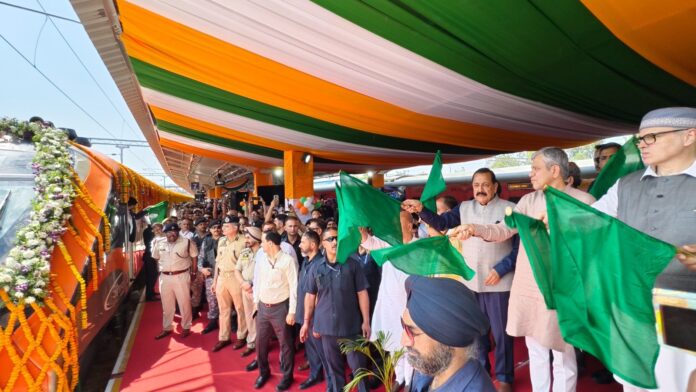
Among the dignitaries present at the flagging off ceremony were Chief Minister Omar Abdullah and the Minister of State in the Prime Minister’s Office, Jitendra Singh. This event marks a pivotal moment for Jammu and Kashmir, as the train service substantially cuts travel time between the twin capitals, Jammu and Srinagar, while also boosting tourism and providing a reliable transport link throughout the year.

The initiative stems from Prime Minister Narendra Modi’s inauguration of the first direct train service connecting Katra to Srinagar on June 6, 2025. The service has been expanded to include stops at the Jammu Tawi Railway Station, further enhancing accessibility for travelers.

The monumental Rs 43,780 crore rail project, which began in the late 1990s, has taken several years to complete. The first train operated within the Kashmir Valley in October 2008, symbolizing a long-awaited connection for the region.

During a media interaction after the ceremony, Vaishnaw underscored the government’s strategic focus on providing railway links to Poonch and Rajouri. “We will now focus on connecting Poonch and Rajouri with rail connectivity. We will also take up a project to connect Uri with the train,” he stated, emphasizing the urgency and importance of these projects.

Vaishnaw labeled the Jammu-Srinagar Vande Bharat Express as a “major landmark achievement,” now considered a lifeline for the people of the region. “This train service is very popular, consistently running at 100% occupancy,” he added, highlighting the growing demand for increased passenger capacity.

To accommodate this demand, the train’s configuration has changed from eight coaches to a 20-coach setup, allowing more passengers to travel comfortably. This development not only aids in passenger transport but also facilitates goods movement, including vital materials like cement.

According to Vaishnaw, “I have been told that the prices of cement have dropped by Rs 50 (per bag). About 20,000 tons of apples and other fruits have already been transported to various regions of India via this train.” He lauded the Vande Bharat Express as an all-weather train, emphasizing its capability to operate under extreme weather conditions, including temperatures as low as minus 10 degrees Celsius. “Last winter, despite heavy snowfall, trains still operated reliably,” he noted.

The railway minister also pointed out the unprecedented operational altitude of this train, designed specifically for high-altitude travel, thus ensuring smooth movement of goods and produce out of the region.

Chief Minister Abdullah expressed his gratitude to the Railways Minister and the central government, celebrating the enhanced connectivity that the Vande Bharat service will bring to Jammu and Kashmir. In his remarks, Abdullah pointed out the beneficial economic implications this service heralds for trade in the region, particularly for commodities like cement and vehicle transport.

“This connectivity is pivotal; we had long awaited the ability to travel efficiently from Jammu to Srinagar,” Abdullah stated. He acknowledged the growing popularity of the train service, sharing how he had to seek reservations amidst overwhelming demand.

Moreover, Abdullah appealed for an inland port in Jammu and Kashmir to streamline customs processes for goods exporting from the union territory, stating, “This will facilitate trade and bolstering of our local economy.”

Echoing similar sentiments, Jitendra Singh highlighted the broader economic growth potential the new train service brings to Jammu and Kashmir. “The direct train service will make travel much easier for tourists and pilgrims alike,” he stated.

Experts suggest that the establishment of robust rail connectivity will not only improve transportation efficiency but also attract further investment into the region. By enhancing accessibility, the Vande Bharat Express plays a critical role in boosting local commerce and tourism.

In conclusion, the launch of the Jammu-Srinagar Vande Bharat Express signifies a monumental step towards integrating Jammu and Kashmir into India’s national rail network, fostering economic growth and enhancing connectivity for its residents. The minister’s commitment to extending rail links to Uri and beyond points towards a promising future for railway infrastructure in this vital region.


Related Articles

LEAVE A REPLY

Please enter your comment!
Please enter your name here

- Advertisement -spot_img

Latest Articles

Vaishnaw Launches Jammu-Srinagar Vande Bharat Express, Promises Rail Link to Uri

On Thursday, as the inaugural Jammu-Srinagar Vande Bharat Express rolled into the picturesque Kashmir Valley, Railways Minister Ashwini Vaishnaw reaffirmed a commitment to enhance rail connectivity to remote regions including Poonch, Rajouri, and Uri. This significant development aims to better integrate these areas into India’s extensive rail network.

The launch of this direct train service comes after the successful completion of the Udhampur-Srinagar-Baramulla Rail Link (USBRL). Vaishnaw disclosed that detailed project reports (DPRs) are already in place, detailing plans for connecting the Poonch-Rajouri region and extending the rail line to Uri, a crucial border town in Baramulla district.

Among the dignitaries present at the flagging off ceremony were Chief Minister Omar Abdullah and the Minister of State in the Prime Minister’s Office, Jitendra Singh. This event marks a pivotal moment for Jammu and Kashmir, as the train service substantially cuts travel time between the twin capitals, Jammu and Srinagar, while also boosting tourism and providing a reliable transport link throughout the year.

The initiative stems from Prime Minister Narendra Modi’s inauguration of the first direct train service connecting Katra to Srinagar on June 6, 2025. The service has been expanded to include stops at the Jammu Tawi Railway Station, further enhancing accessibility for travelers.

The monumental Rs 43,780 crore rail project, which began in the late 1990s, has taken several years to complete. The first train operated within the Kashmir Valley in October 2008, symbolizing a long-awaited connection for the region.

During a media interaction after the ceremony, Vaishnaw underscored the government’s strategic focus on providing railway links to Poonch and Rajouri. “We will now focus on connecting Poonch and Rajouri with rail connectivity. We will also take up a project to connect Uri with the train,” he stated, emphasizing the urgency and importance of these projects.

Vaishnaw labeled the Jammu-Srinagar Vande Bharat Express as a “major landmark achievement,” now considered a lifeline for the people of the region. “This train service is very popular, consistently running at 100% occupancy,” he added, highlighting the growing demand for increased passenger capacity.

To accommodate this demand, the train’s configuration has changed from eight coaches to a 20-coach setup, allowing more passengers to travel comfortably. This development not only aids in passenger transport but also facilitates goods movement, including vital materials like cement.

According to Vaishnaw, “I have been told that the prices of cement have dropped by Rs 50 (per bag). About 20,000 tons of apples and other fruits have already been transported to various regions of India via this train.” He lauded the Vande Bharat Express as an all-weather train, emphasizing its capability to operate under extreme weather conditions, including temperatures as low as minus 10 degrees Celsius. “Last winter, despite heavy snowfall, trains still operated reliably,” he noted.

The railway minister also pointed out the unprecedented operational altitude of this train, designed specifically for high-altitude travel, thus ensuring smooth movement of goods and produce out of the region.

Chief Minister Abdullah expressed his gratitude to the Railways Minister and the central government, celebrating the enhanced connectivity that the Vande Bharat service will bring to Jammu and Kashmir. In his remarks, Abdullah pointed out the beneficial economic implications this service heralds for trade in the region, particularly for commodities like cement and vehicle transport.

“This connectivity is pivotal; we had long awaited the ability to travel efficiently from Jammu to Srinagar,” Abdullah stated. He acknowledged the growing popularity of the train service, sharing how he had to seek reservations amidst overwhelming demand.

Moreover, Abdullah appealed for an inland port in Jammu and Kashmir to streamline customs processes for goods exporting from the union territory, stating, “This will facilitate trade and bolstering of our local economy.”

Echoing similar sentiments, Jitendra Singh highlighted the broader economic growth potential the new train service brings to Jammu and Kashmir. “The direct train service will make travel much easier for tourists and pilgrims alike,” he stated.

Experts suggest that the establishment of robust rail connectivity will not only improve transportation efficiency but also attract further investment into the region. By enhancing accessibility, the Vande Bharat Express plays a critical role in boosting local commerce and tourism.

In conclusion, the launch of the Jammu-Srinagar Vande Bharat Express signifies a monumental step towards integrating Jammu and Kashmir into India’s national rail network, fostering economic growth and enhancing connectivity for its residents. The minister’s commitment to extending rail links to Uri and beyond points towards a promising future for railway infrastructure in this vital region.

Related Articles

LEAVE A REPLY

Please enter your comment!
Please enter your name here

- Advertisement -spot_img

Latest Articles