

36.3 C
Jammu
Tuesday, August 4, 2026
spot_img

CAT Chairman Updates Dr Jitendra: Disposal Rate Exceeds 93%

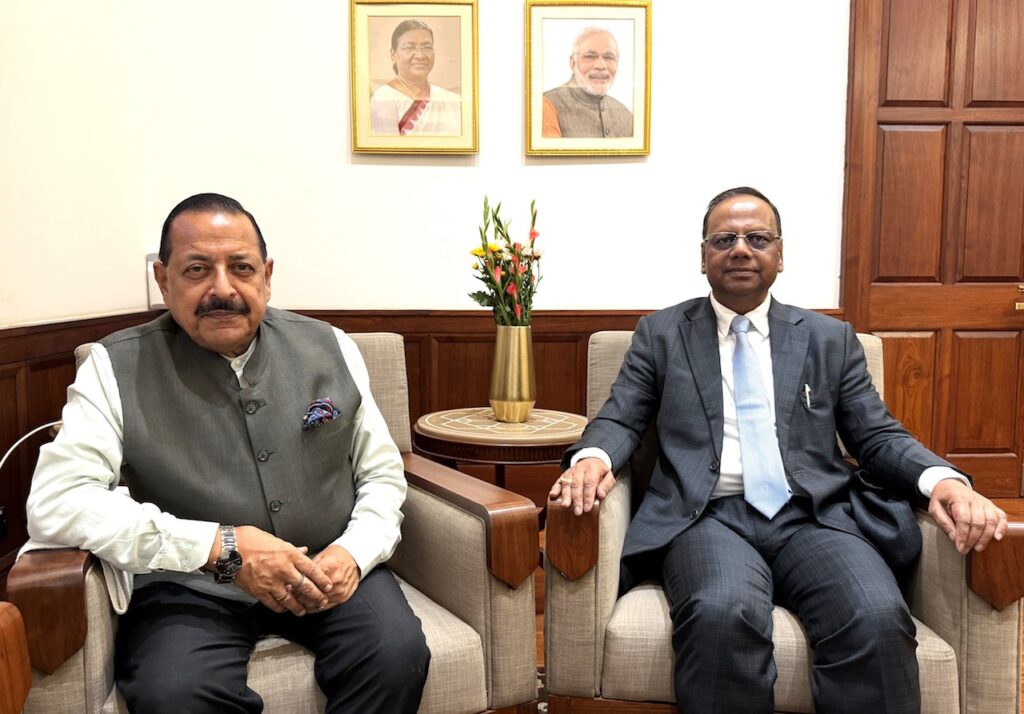
Justice Ranjit Vasantrao More, the Chairman of the Central Administrative Tribunal (CAT), met with Union Minister Dr. Jitendra Singh to discuss significant reforms in administrative justice. The meeting highlighted the tribunal’s impressive case disposal rate, which stands at over 93% since its inception.

Justice More shared that the CAT has received over 10 lakh cases and disposed of more than 9.32 lakh cases, showcasing its efficiency and effectiveness in delivering justice. This statistic underscores the tribunal’s commitment to maintaining high standards of administrative justice.

Dr. Jitendra Singh emphasized that the Government, under Prime Minister Narendra Modi’s leadership, prioritizes governance reforms. These reforms aim to enhance transparency and efficiency in public institutions. He asserted that improving access to administrative justice is crucial for good governance and signals the government’s intent to make public services more citizen-centric.

“Administrative justice is key to good governance. We must enhance accessibility, efficiency, and ease of service delivery for government employees throughout India,” Dr. Singh stated.

The Minister pointed out that advancements in technology drive transparency and efficiency within public institutions. Digital platforms now enable faster service delivery and enhance accountability while reducing procedural delays. He noted that these changes ultimately respond to citizens’ needs more effectively.

Dr. Singh called attention to several initiatives by the CAT designed to increase accessibility to justice. The establishment of new Benches and Circuit Sittings in geographically dispersed areas brings administrative justice closer to litigants, reducing travel burdens for government employees.

“Expanding access to justice is an ongoing commitment,” Dr. Singh said. “New Benches and Circuit Sittings play an essential role in achieving this goal.”

He further highlighted that institutional reforms yield meaningful outcomes when they produce measurable benefits. Continuous improvements in case disposal rates and modernized judicial processes reflect the success of sustained reforms, supported by technology and enhanced administrative systems.

Justice More briefed the Minister on several notable advancements made by the Tribunal in recent years. The Tribunal has set up new Benches at Jammu and Srinagar, and launched Circuit Sittings in Puducherry, Leh, Kargil, and Vijayawada. These initiatives aim to ensure administrative justice is accessible to remote and underserved regions.

The discussion also covered the successful implementation of the Advanced Case Information System (ACIS). This digital platform facilitates a wide range of services, including e-filing, virtual hearings, and online payment options, along with features such as SMS and email alerts.

“These initiatives align with the Government’s vision of Digital India,” Dr. Jitendra Singh commented. “Technology is transforming institutions into more accessible and responsive entities.”

Justice More reiterated the Tribunal’s commitment to efficiency, pointing out that since its inception, it has maintained a disposal rate exceeding 93%, with a notable decline in pendency despite an influx of fresh cases. “In 2025, our annual disposal rates outpaced the incoming cases,” he added.

The Minister also welcomed the Tribunal’s efforts in fully implementing e-Office across all Benches, onboarding staff to the e-HRMS, and adopting the Public Financial Management System (PFMS). He noted the digital processing of pension cases through the Bhavishya Portal as a significant achievement within the Tribunal’s broader digital governance initiatives.

Dr. Singh reaffirmed the Government’s support for reforms that strengthen institutional capacity and improve public service delivery through technological innovations. “Our aim is to continue translating governance reforms into tangible benefits for both employees and the public,” he concluded.


Related Articles

LEAVE A REPLY

Please enter your comment!
Please enter your name here

- Advertisement -spot_img

Latest Articles

CAT Chairman Updates Dr Jitendra: Disposal Rate Exceeds 93%

Justice Ranjit Vasantrao More, the Chairman of the Central Administrative Tribunal (CAT), met with Union Minister Dr. Jitendra Singh to discuss significant reforms in administrative justice. The meeting highlighted the tribunal’s impressive case disposal rate, which stands at over 93% since its inception.

Justice More shared that the CAT has received over 10 lakh cases and disposed of more than 9.32 lakh cases, showcasing its efficiency and effectiveness in delivering justice. This statistic underscores the tribunal’s commitment to maintaining high standards of administrative justice.

Dr. Jitendra Singh emphasized that the Government, under Prime Minister Narendra Modi’s leadership, prioritizes governance reforms. These reforms aim to enhance transparency and efficiency in public institutions. He asserted that improving access to administrative justice is crucial for good governance and signals the government’s intent to make public services more citizen-centric.

“Administrative justice is key to good governance. We must enhance accessibility, efficiency, and ease of service delivery for government employees throughout India,” Dr. Singh stated.

The Minister pointed out that advancements in technology drive transparency and efficiency within public institutions. Digital platforms now enable faster service delivery and enhance accountability while reducing procedural delays. He noted that these changes ultimately respond to citizens’ needs more effectively.

Dr. Singh called attention to several initiatives by the CAT designed to increase accessibility to justice. The establishment of new Benches and Circuit Sittings in geographically dispersed areas brings administrative justice closer to litigants, reducing travel burdens for government employees.

“Expanding access to justice is an ongoing commitment,” Dr. Singh said. “New Benches and Circuit Sittings play an essential role in achieving this goal.”

He further highlighted that institutional reforms yield meaningful outcomes when they produce measurable benefits. Continuous improvements in case disposal rates and modernized judicial processes reflect the success of sustained reforms, supported by technology and enhanced administrative systems.

Justice More briefed the Minister on several notable advancements made by the Tribunal in recent years. The Tribunal has set up new Benches at Jammu and Srinagar, and launched Circuit Sittings in Puducherry, Leh, Kargil, and Vijayawada. These initiatives aim to ensure administrative justice is accessible to remote and underserved regions.

The discussion also covered the successful implementation of the Advanced Case Information System (ACIS). This digital platform facilitates a wide range of services, including e-filing, virtual hearings, and online payment options, along with features such as SMS and email alerts.

“These initiatives align with the Government’s vision of Digital India,” Dr. Jitendra Singh commented. “Technology is transforming institutions into more accessible and responsive entities.”

Justice More reiterated the Tribunal’s commitment to efficiency, pointing out that since its inception, it has maintained a disposal rate exceeding 93%, with a notable decline in pendency despite an influx of fresh cases. “In 2025, our annual disposal rates outpaced the incoming cases,” he added.

The Minister also welcomed the Tribunal’s efforts in fully implementing e-Office across all Benches, onboarding staff to the e-HRMS, and adopting the Public Financial Management System (PFMS). He noted the digital processing of pension cases through the Bhavishya Portal as a significant achievement within the Tribunal’s broader digital governance initiatives.

Dr. Singh reaffirmed the Government’s support for reforms that strengthen institutional capacity and improve public service delivery through technological innovations. “Our aim is to continue translating governance reforms into tangible benefits for both employees and the public,” he concluded.

Related Articles

LEAVE A REPLY

Please enter your comment!
Please enter your name here

- Advertisement -spot_img

Latest Articles