

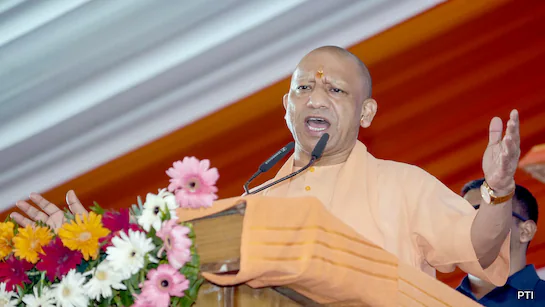
Uttar Pradesh Chief Minister Yogi Adityanath addressed the significance of ‘political Islam’ in undermining Hindu faith during a recent event in Gorakhpur. He argued that while colonial histories dominate discussions, the detrimental impact of political Islam on Sanatan Dharma remains largely unacknowledged.
Speaking at the ‘Vichar-Parivar Kutumb Sneh Milan’ and ‘Deepotsav Se Rashtrotsav’ programmes to commemorate the centenary of the RSS, Adityanath highlighted the battles fought by great Indian warriors like Chhatrapati Shivaji Maharaj, Guru Gobind Singh, Maharana Pratap, and Maharana Sanga against political Islam. These historical figures represented resilience against what he termed an ideological assault on Hinduism.
“Our ancestors waged major struggles against political Islam, yet this aspect of history remains largely overlooked,” Adityanath emphasized to the gathered audience. He lamented that admiration for warriors like Veer Shivaji often falls short of recognizing their battles against not just colonial powers but also political ideologies that threatened Hindu culture.
During his address, Adityanath praised the RSS for their “pivotal role in the construction of the Ram temple in Ayodhya.” He underscored the commitment of RSS volunteers who faced challenges from various political factions regarding the temple’s establishment.
“While members of the Samajwadi Party, Congress, and the recently formed INDIA bloc questioned the Ram temple, RSS volunteers remained steadfast in their resolve to see it built,” he stated, remarking on the sacrifices made throughout this journey.
According to the Chief Minister, the ongoing ideological threat of political Islam manifests in contemporary society under various labels. He condemned these movements, asserting their roots in intolerance towards Hindu practices.
In a bold move, Adityanath announced a ban on the sale of Halal-certified products in Uttar Pradesh. He claimed the proceeds from these products funded activities related to conversion, love jihad, and terrorism, positioning the ban as part of a broader strategy to protect Hindu values.
Reflecting on the RSS’s centenary, Adityanath detailed five transformative goals for a developed India: social harmony, family values, environmental protection, self-reliance through indigenous goods, and active civic responsibility. He declared these aspirations as foundational to a ‘Viksit Bharat’, or developed nation.
“For a developed society and a developed nation, society must lead, and the government must follow,” he affirmed, echoing a vision that intertwines cultural revival with governance. Adityanath’s statements resonate strongly within the current socio-political landscape, as he positions the RSS as a crucial player in shaping a Hindu-centric narrative against perceived threats.
This emphasis on ‘political Islam’ comes at a time when discussions around communal identity and historical narratives in India are increasingly polarized. The Chief Minister’s remarks aim to galvanize support among his base, reinforcing the concept of historical battles fought not only on the battlefield but also ideologically.
As Uttar Pradesh navigates its political landscape leading into upcoming elections, the invocation of historical struggles against political Islam could be pivotal in rallying support for the BJP’s broader agenda.