

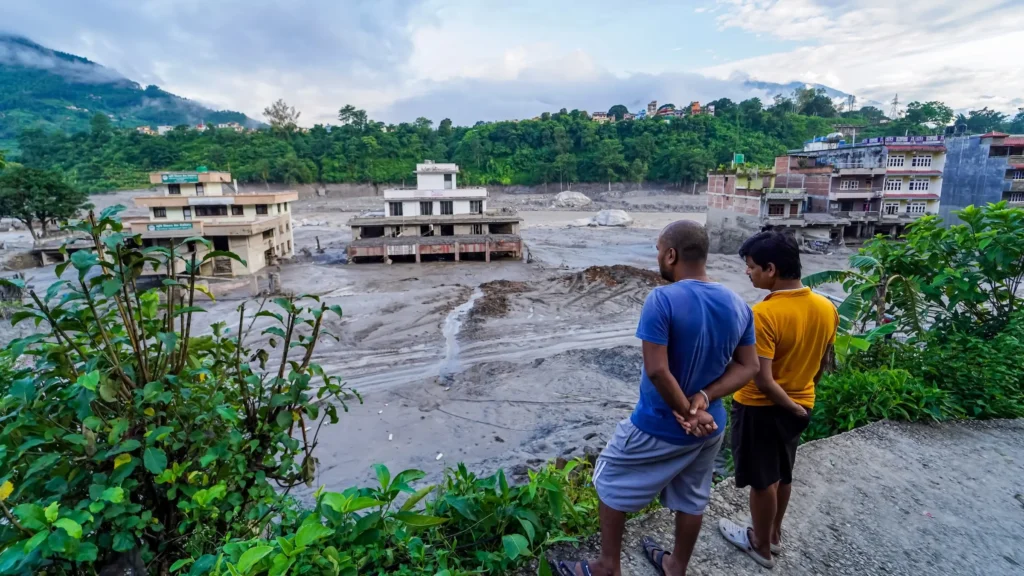
The death toll from Nepal’s devastating flash floods has tragically reached 1,344 as rescue teams discover more bodies across affected districts, with nearly 4,900 individuals still missing, according to officials on Saturday. This catastrophe has sharply impacted families and communities, requiring extensive rescue operations.
Details from Nepal’s National Disaster Risk Reduction and Management Authority indicate that over 13,000 individuals have been pulled from flood-affected regions since the disaster struck on August 26. The floods originated from an ice-rock avalanche near the Nepal-Tibet border, which unleashed enormous volumes of water into the Bhotekoshi River and downstream areas.
The catastrophic waters swept away homes, vehicles, roads, and bridges, severely damaging multiple hydropower projects throughout northern and central Nepal. “Immediate rescue efforts focus on areas with heavy debris to ensure no one is overlooked,” stated an official.
Among the deceased, officials reported a heart-wrenching breakdown: 758 are adults and 85 are children, while 501 bodies were found with parts missing. The prolonged exposure to flooding and debris has complicated the recovery process.
To date, authorities have temporarily buried 1,030 bodies after completing necessary procedures, including valuable DNA collection for identification. Chitwan district reports the highest number of recoveries, with around 360 bodies retrieved there alone. Bodies have also surfaced in Rasuwa, Nuwakot, Dhading, Gorkha, Tanahun, Nawalparasi East, and Nawalparasi West.
Among the missing are over 600 children from Rasuwa and Nuwakot, raising substantial concerns for their families and the community. These shocking statistics underline the urgent need for continued rescue efforts.
Authorities diligently monitor water levels across major rivers such as the Koshi, Narayani, Bagmati, and Karnali, among others, as the situation remains fluid. Joint rescue operations led by the Nepal Army have entered their 11th consecutive day. Efforts primarily concentrate on hydropower projects, where many workers remain trapped.
International support has poured in, with teams from India and China assisting Nepali rescuers. Recently, two men were rescued alive from a tunnel at the Trishuli 3A hydropower project. The Nepal Army identified them as Kabir Maharjan, 45, the mechanical supervisor, and Sanjay Sah, 30, a foreman, bringing a glimmer of hope amidst the tragedy.
Authorities also reported that an Indian rescue team collaborated with the Nepal Army to establish temporary tracks within the Chilime tunnel located in Rasuwa district, allowing heavy rescue equipment to reach the most affected sectors.
The disaster also impacts China, with reports confirming at least 21 fatalities on the Chinese side and over 500 individuals missing in Tibet. The scale of this tragedy transcends borders, highlighting a regional crisis that demands cooperation.
As rescue operations continue, authorities remain vigilant, recovering more bodies and monitoring river levels. The commitment to aid those affected is resolute, reflecting the resilience and humanity of the Nepali people amidst one of their most challenging times.