
Chief Secretary Atal Dulloo announced on Thursday that the Pradhan Mantri Skilling and Employability Transformation through Upgraded ITIs (PM-SETU) scheme is poised to transform Industrial Training Institutes (ITIs) in Jammu and Kashmir into modern, industry-ready skill hubs. This initiative will see an indicative investment of ₹482 crore over the next five years, aimed at equipping youth with high-demand skills to enhance quality employment opportunities.
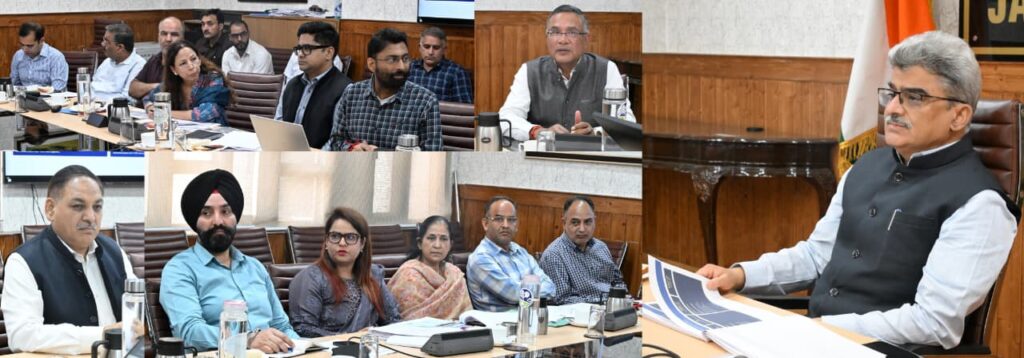
Dulloo shared these developments during the inaugural UT-level Steering Committee meeting focused on the implementation of PM-SETU. The meeting witnessed participation from key officials, including the Additional Chief Secretary for Finance, Commissioner Secretary for Education, and Secretary of the Skill Development Department, among others.
He described PM-SETU as an effective model for strengthening skill education in the region. The Chief Secretary emphasized the need to upgrade ITIs, ensuring they are not just enhanced in terms of physical infrastructure but also in creating an entire ecosystem aligned with industry standards. This approach is crucial for empowering J&K’s youth with skills that translate into quality employment.
Dulloo urged industry partners to contribute in various ways including technology transfer, modern training methodologies, and creating credible pathways for employment opportunities. Collaboration among government, industry stakeholders, and training institutions should guide the design of relevant courses and training programs tailored to emerging market demands.
Kumar Rajeev Ranjan, Secretary of the Skill Development Department, presented comprehensive insights on the proposed institutional setup, funding framework, and implementation strategies for PM-SETU. He indicated that the scheme would allocate approximately ₹482 crore for J&K, with ₹241 crore designated for each of the two hub-and-spoke clusters.
Under PM-SETU, 10 Government ITIs will evolve into modern skill institutions, each organized within two defined hub-and-spoke clusters. These hubs will serve as core technology and resource centers for four satellite ITIs, enhancing access to cutting-edge technologies, modern training infrastructure, and support for capacity building among trainers. This initiative aims for an ambitious institutional placement rate of 75 percent.
A pivotal aspect of PM-SETU hinges on its industry-led implementation framework. Special Purpose Vehicles (SPVs) will be established to encourage active involvement from industry stakeholders in institutional governance, curriculum selection, technology integration, and placement strategies. This model aims to ensure that training programs are responsive to market dynamics and align with real-world manpower needs.
The initiative identifies priority sectors including advanced manufacturing, heavy engineering, automotive, and process industries, alongside textiles, construction, and food processing. These sectors are anticipated to yield significant employment opportunities in Jammu and Kashmir.
The committee detailed the tripartite financial model underpinning PM-SETU, which anticipates a 74.7 percent contribution from the Central Government, 8.3 percent from the UT Government, and 17 percent from Anchor Industry Partners (AIPs). Each Hub ITI is expected to cost approximately ₹81 crore, while Spoke ITIs will entail about ₹40 crore each.
Companies participating in this initiative must adhere to specific eligibility criteria, which requires an average annual turnover of at least ₹200 crore over the past three financial years, possess positive net worth, and employ a minimum of 500 personnel.
In closing remarks, Dulloo stated, “The real measure of PM-SETU’s success lies in its effectiveness in creating a steady pipeline of skilled manpower ready for industry needs, thereby connecting J&K’s youth to improved employment opportunities and entrepreneurship prospects.” He emphasized that skill development should emerge as a pivotal driver for economic growth in the Union Territory.