
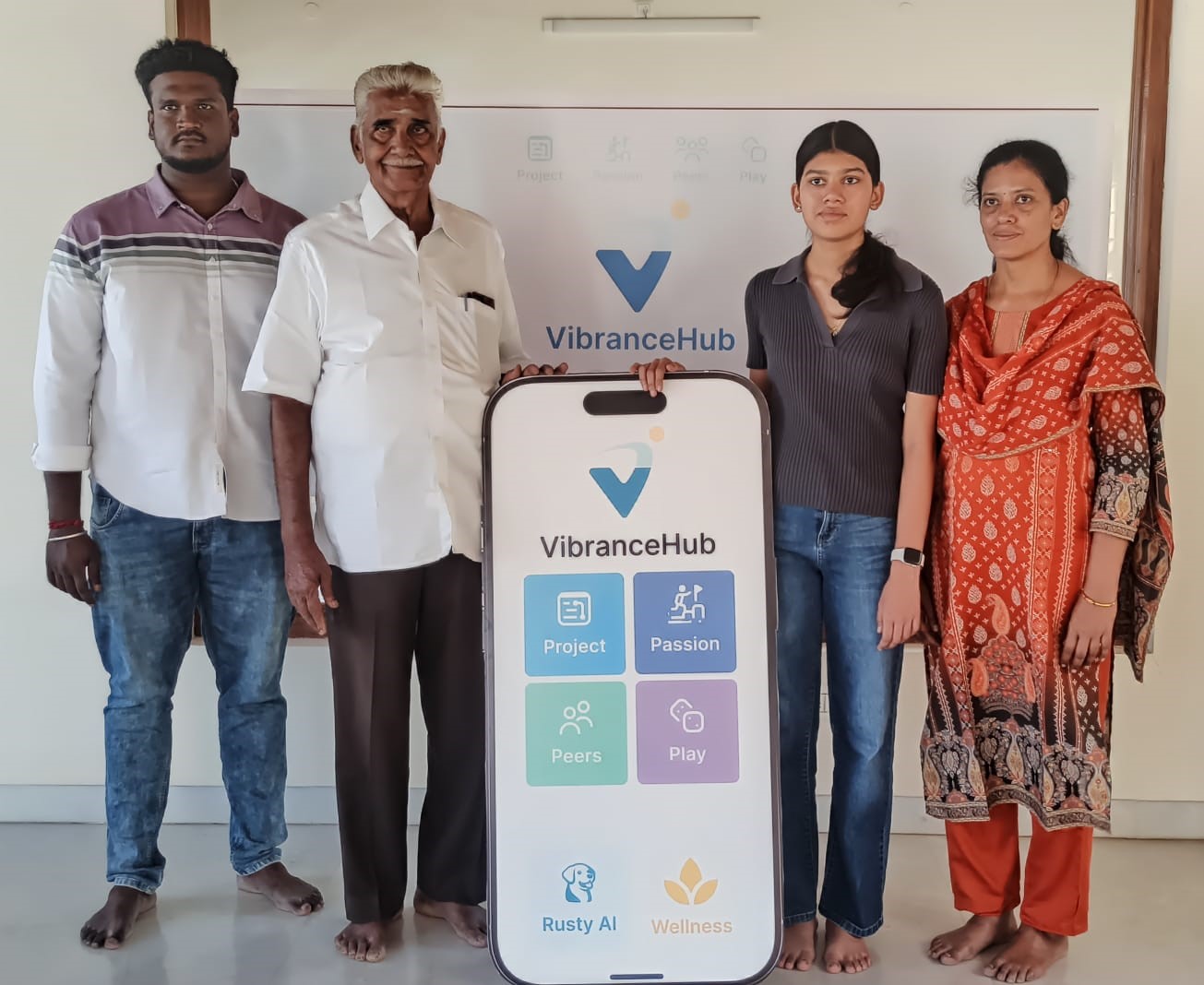
COIMBATORE — Rithanya Sivaram, a dynamic Class 12 student at The Indian Public School, has launched Vibrance Hub, an innovative platform focusing on project-based learning, peer collaboration, and integrated wellbeing. This initiative addresses a critical educational gap in India as it gears students for an AI-driven future where creativity and innovation are essential.
Sivaram emphasizes the changing landscape of education: “In the age of AI, information is commoditized. What matters now is what you can make, how you think, and whether you can sustain creative work over time.” She believes that while Atal Tinkering Labs provide students with the necessary tools to experiment on a national scale, Vibrance Hub offers the community and wellbeing practices crucial for nurturing sustained creativity.
Vibrance Hub is built on the MIT-developed Lifelong Kindergarten framework, which integrates Passion, Projects, Peers, and Play. This model emphasizes that maker education transcends simple construction. Instead, it instills computational thinking, builds resilience through iteration, and champions collaborative skills—abilities that AI cannot emulate.
Sivaram highlights a pressing issue: Children initially approach challenges with fearless experimentation. However, as years of standardized testing take their toll, fears of self-criticism and the pressure for perfect answers stifle this natural creativity. “It’s disheartening to see students deem themselves ‘not creative’ due to social conditioning,” she states.
Vibrance Hub embodies a return to India’s educational roots. The country’s traditional gurukul system focused on experiential learning, where students acquired knowledge through active engagement in crafting and problem-solving. In the 1830s, British colonial education shifted this focus to rote learning, creating a system designed for compliance rather than innovation.
The National Education Policy 2020 acknowledges this need for change, advocating for a maker-centric approach to education. It posits that India’s prosperity in the coming years will hinge on cultivating creators rather than mere information repeaters.
To operationalize this philosophy, the Atal Innovation Mission (AIM), launched in 2016 by NITI Aayog, aims at providing the infrastructural backbone needed for hands-on learning across India. AIM’s initiatives echo the principles laid out in the NEP 2020 by fostering creativity and nurturing innovation through tangible educational reforms.
As the vibrancy of the Indian educational landscape evolves, platforms like Vibrance Hub play a crucial role in ensuring students thrive amid growing technological advancements. By prioritizing creative engagement and wellbeing alongside academic excellence, educational institutions and future innovators can work collaboratively to pave the way for a robust and innovative future.