
26.4 C
Jammu
Monday, July 27, 2026
spot_img

Vibrance Hub Launches to Enhance Project-Based Learning in India

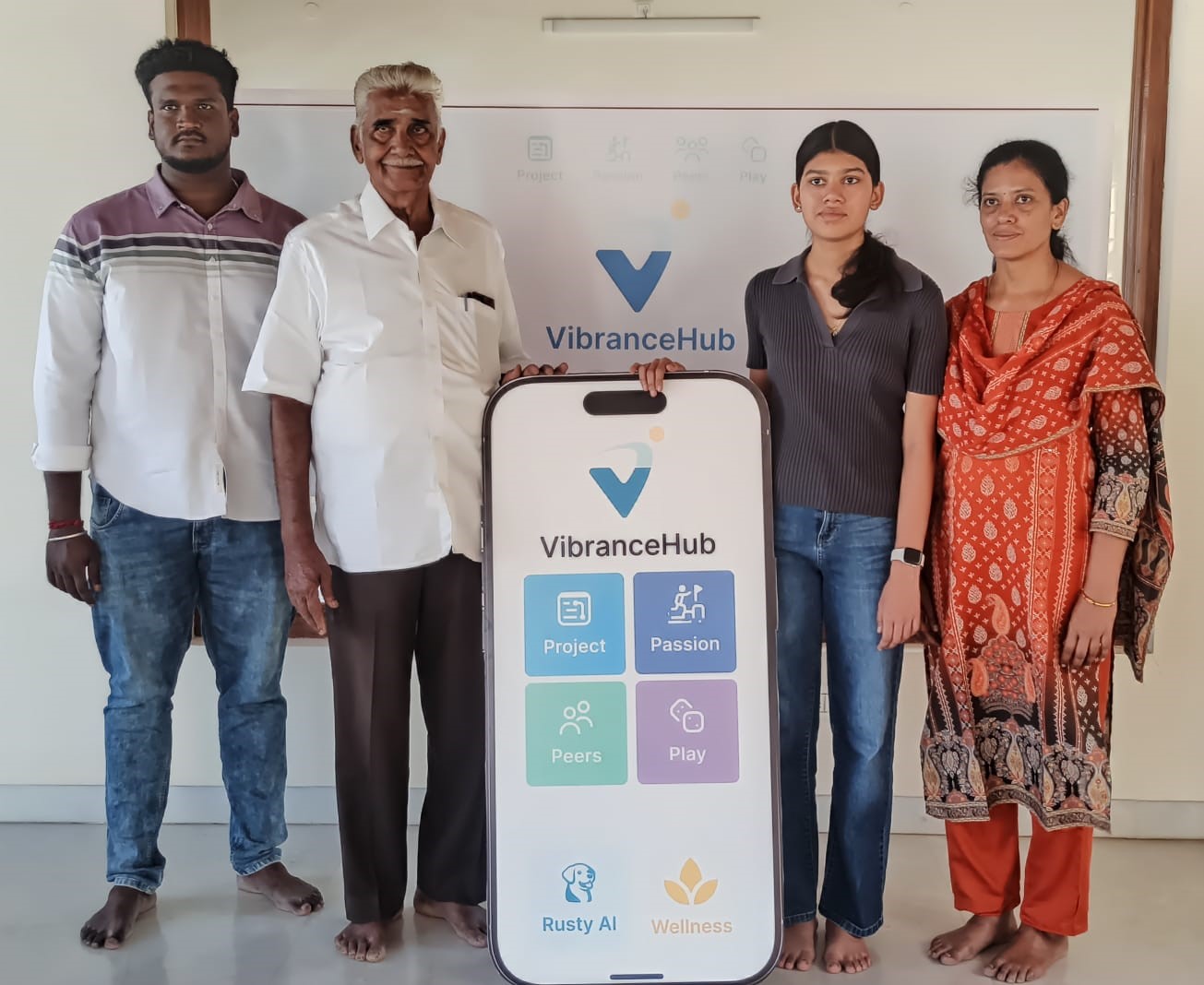
COIMBATORE — Rithanya Sivaram, a Class 12 student at The Indian Public School, has launched Vibrance Hub, a platform that integrates project-based learning, peer collaboration, and wellbeing support. This initiative addresses a key gap as India prepares students for an AI-dominated future where creativity and sustained innovation are paramount.

“In the age of AI, information is commoditized. What matters now is what you can make, how you think, and whether you can sustain creative work over time,” says Sivaram. She highlights that Vibrance Hub provides the necessary scaffolding, community, and wellness practices for students to transform their interests into sustained creative projects.

Using MIT’s Lifelong Kindergarten framework—Passion, Projects, Peers, and Play—Vibrance Hub emphasizes that maker education transcends simple construction. It focuses on nurturing core skills such as computational thinking, resilience through iterative processes, and collaboration, abilities that AI cannot replicate.

The initiative represents a return to India’s educational roots. Historically, the gurukul tradition emphasized active learning through hands-on creation, contrasting sharply with the rote-learning system imposed by Macaulay’s Minute on Education in 1835. This traditional framework encouraged student engagement in practical disciplines such as metallurgy, astronomy, and medicine.

The National Education Policy (NEP) 2020 echoes this sentiment, advocating for a maker-centric approach. The policy argues that the future prosperity of India hinges on fostering creators and innovators, rather than mere information absorbers.

To operationalize this maker-centric philosophy, the Atal Innovation Mission (AIM) was launched in 2016 by NITI Aayog. AIM embodies India’s most ambitious effort to provide infrastructure for hands-on learning nationwide, boosting the NEP 2020’s goals for creativity and innovation.

As the country steers towards an AI-driven economy, platforms like Vibrance Hub will play an essential role in bridging the gap between traditional education and the demands of the future workforce. Their approach offers students not just knowledge, but the skills necessary for innovation and resilience in a changing global landscape.

By emphasizing practical experiences, Vibrance Hub fosters an environment where students can explore their passions while promoting mental wellbeing through yoga practices integrated into learning. This holistic method could prove crucial in preparing the next generation for the challenges of an increasingly complex world.


Related Articles

LEAVE A REPLY

Please enter your comment!
Please enter your name here

- Advertisement -spot_img

Latest Articles

Vibrance Hub Launches to Enhance Project-Based Learning in India

COIMBATORE — Rithanya Sivaram, a Class 12 student at The Indian Public School, has launched Vibrance Hub, a platform that integrates project-based learning, peer collaboration, and wellbeing support. This initiative addresses a key gap as India prepares students for an AI-dominated future where creativity and sustained innovation are paramount.

“In the age of AI, information is commoditized. What matters now is what you can make, how you think, and whether you can sustain creative work over time,” says Sivaram. She highlights that Vibrance Hub provides the necessary scaffolding, community, and wellness practices for students to transform their interests into sustained creative projects.

Using MIT’s Lifelong Kindergarten framework—Passion, Projects, Peers, and Play—Vibrance Hub emphasizes that maker education transcends simple construction. It focuses on nurturing core skills such as computational thinking, resilience through iterative processes, and collaboration, abilities that AI cannot replicate.

The initiative represents a return to India’s educational roots. Historically, the gurukul tradition emphasized active learning through hands-on creation, contrasting sharply with the rote-learning system imposed by Macaulay’s Minute on Education in 1835. This traditional framework encouraged student engagement in practical disciplines such as metallurgy, astronomy, and medicine.

The National Education Policy (NEP) 2020 echoes this sentiment, advocating for a maker-centric approach. The policy argues that the future prosperity of India hinges on fostering creators and innovators, rather than mere information absorbers.

To operationalize this maker-centric philosophy, the Atal Innovation Mission (AIM) was launched in 2016 by NITI Aayog. AIM embodies India’s most ambitious effort to provide infrastructure for hands-on learning nationwide, boosting the NEP 2020’s goals for creativity and innovation.

As the country steers towards an AI-driven economy, platforms like Vibrance Hub will play an essential role in bridging the gap between traditional education and the demands of the future workforce. Their approach offers students not just knowledge, but the skills necessary for innovation and resilience in a changing global landscape.

By emphasizing practical experiences, Vibrance Hub fosters an environment where students can explore their passions while promoting mental wellbeing through yoga practices integrated into learning. This holistic method could prove crucial in preparing the next generation for the challenges of an increasingly complex world.

Related Articles

LEAVE A REPLY

Please enter your comment!
Please enter your name here

- Advertisement -spot_img

Latest Articles